Introduction to data spaces
This document gives an overview of the main technical concepts in data spaces that have been evolving over the past few years.
These concepts are reflected in the IDSA Rulebook, which defines the foundational concepts, rules and requirements for data spaces and IDS-RAM providing architectural guidance for data spaces.
Data spaces
Data spaces enable trusted data sharing, thus creating added value.
The ISO/IEC 20151 Standard "Information technology - Cloud computing and distributed platforms - Dataspace concepts and characteristics" defines data spaces as
environment enabling trusted data sharing between participating parties, based on an agreed governance framework, along with an agreed set of policies, semantic models, standardised protocols, processes, and facilitating services.
The next sections provide details on some of these elements, please also refer to the IDSA Rulebook, What is a Data space section for more information.
Key roles
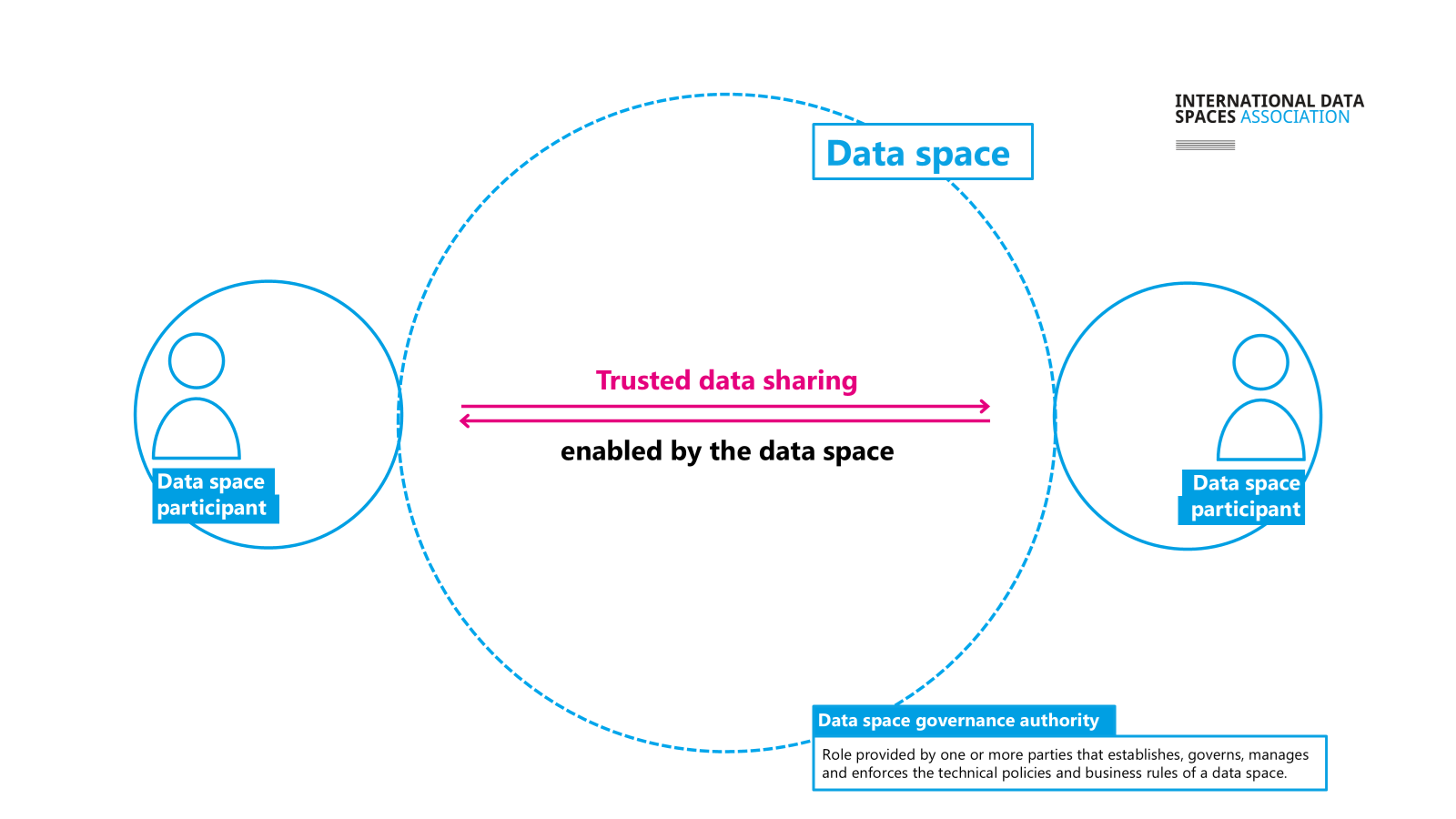
Data Space participants are organizations or entities that want to share data. They take part in a governed data-sharing environment by providing or consuming data or even both.
They follow common rules defined in the data space's governance framework. Their goal is to generate value out of the data.
Participants can act in different roles (data provider, data consumer, data holder, etc. ) depending on which facet you are looking at a data space from (technical, economic, legal, etc.). See layers and roles pages in the IDSA Rulebook for more details.
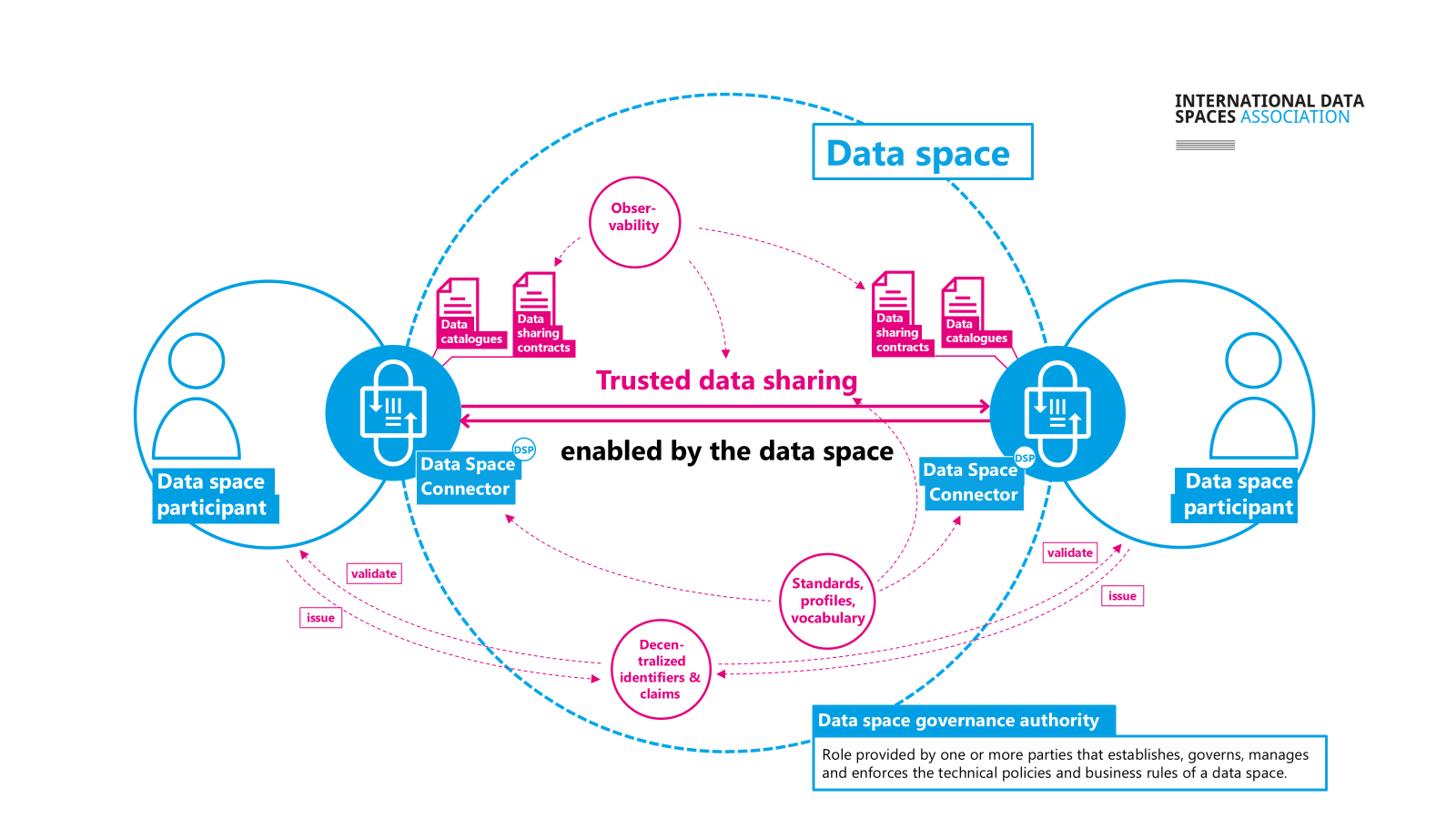
The Data Space Governance Authority (DSGA) provides the overall framework for trusted data sharing. This is a role that may be provided by one or more parties, in a centralized or decentralized manner. It establishes, governs, manages and enforces the technical policies and business rules of a data space.
The governance framework may be very simple, or quite complex depending on the needs of the data space and the use cases. See DSGA page in the Rulebook for more details.
Data Space Connectors and the Dataspace Protocol
Each participant is represented by a software agent (Data space connector) which acts on behalf of this organization in the data space.
The Dataspace Connector offers API endpoints for data and service discovery, data sharing contract negotiation, data sharing orchestration and management of claims about the organization.
IDS-RAM describes these capabilities which can be realized using specifications such as the Dataspace protocol to ensure interoperable communications.
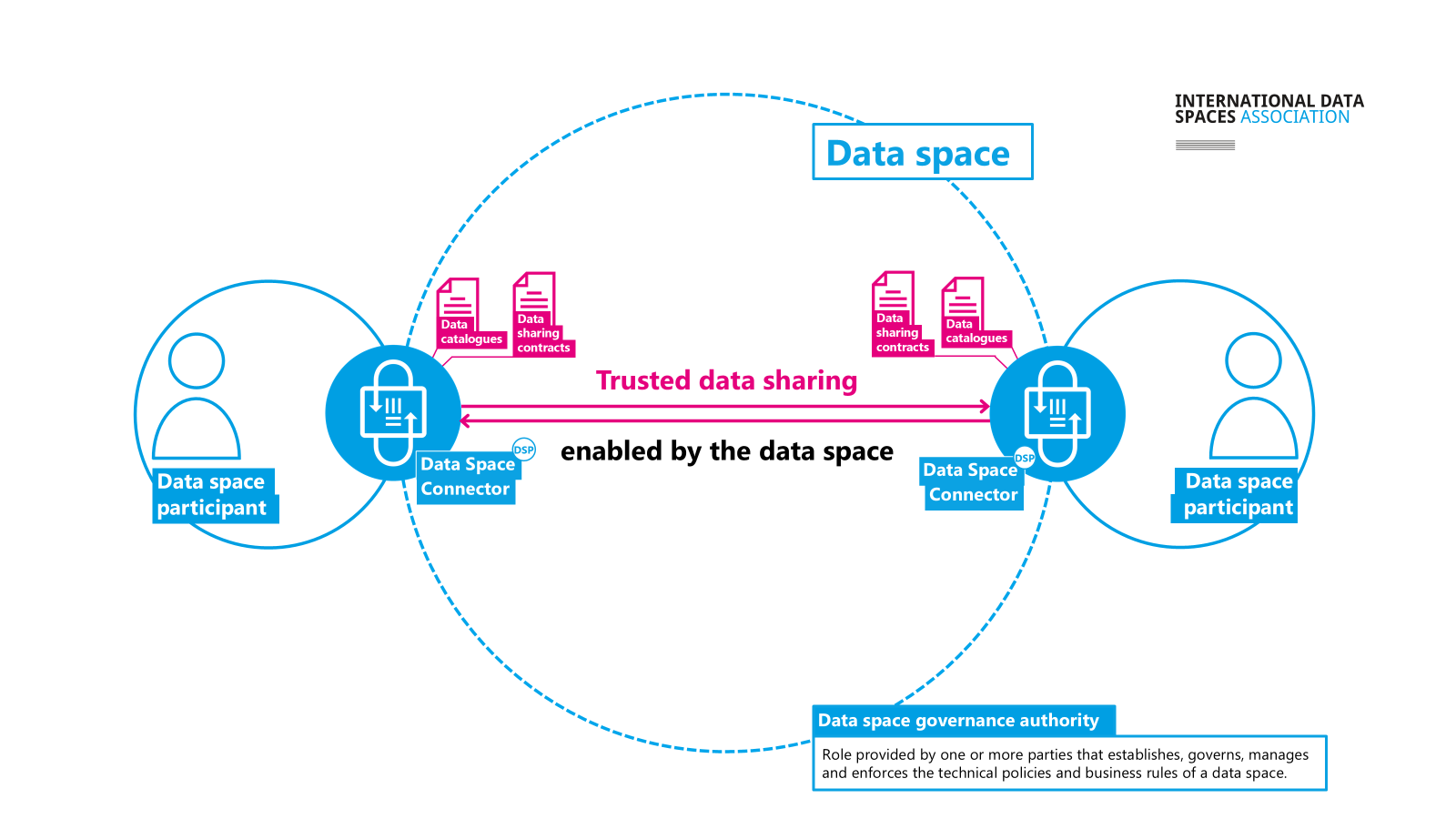
The Dataspace Protocol (ISO/IEC DIS 26450) defines publication/discovery, agreement negotiation, and data access interactions for interoperable data sharing. (Dataspace Protocol Specification on GitHub and Dataspace Protocol Specification)
Decentralized identifiers & claims
This approach supports multiple trust anchors, preserves privacy, and gives participants full technical control over presenting and verifying identity claims.
Decentralized Claims Protocol, DCP (ISO/IEC DIS 26451) provides an overlay to the Dataspace protocol for organizational identity and trust/credential verification while preserving privacy. (Decentralized Claims Protocol specification on GitHub and Decentralized Claims Protocol specification)
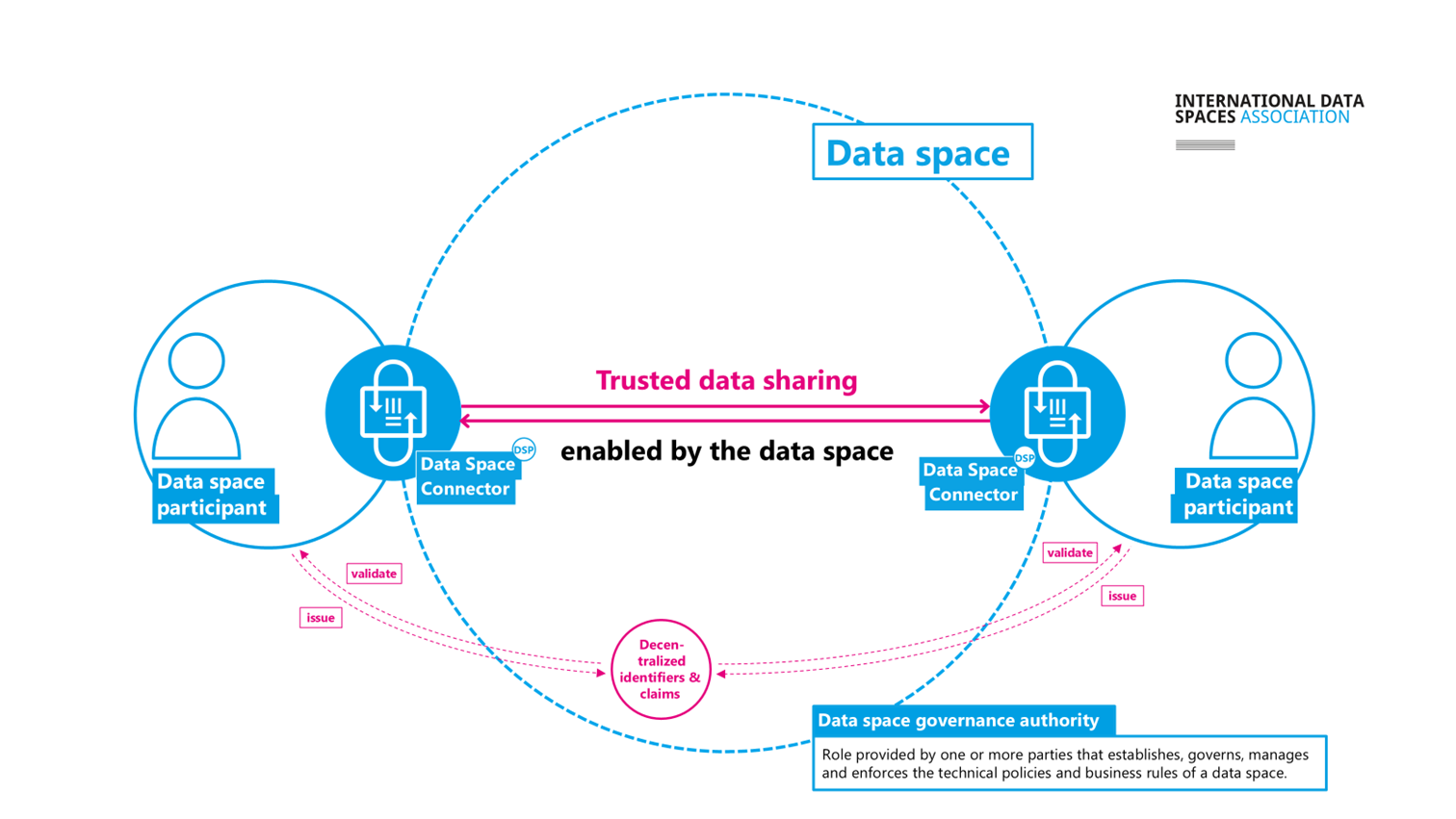
For more information, please visit the draft IDSA position paper on Identifiers in Data Spaces.
Observability
Data sharing transactions can be monitored for legal or business purposes through observability.
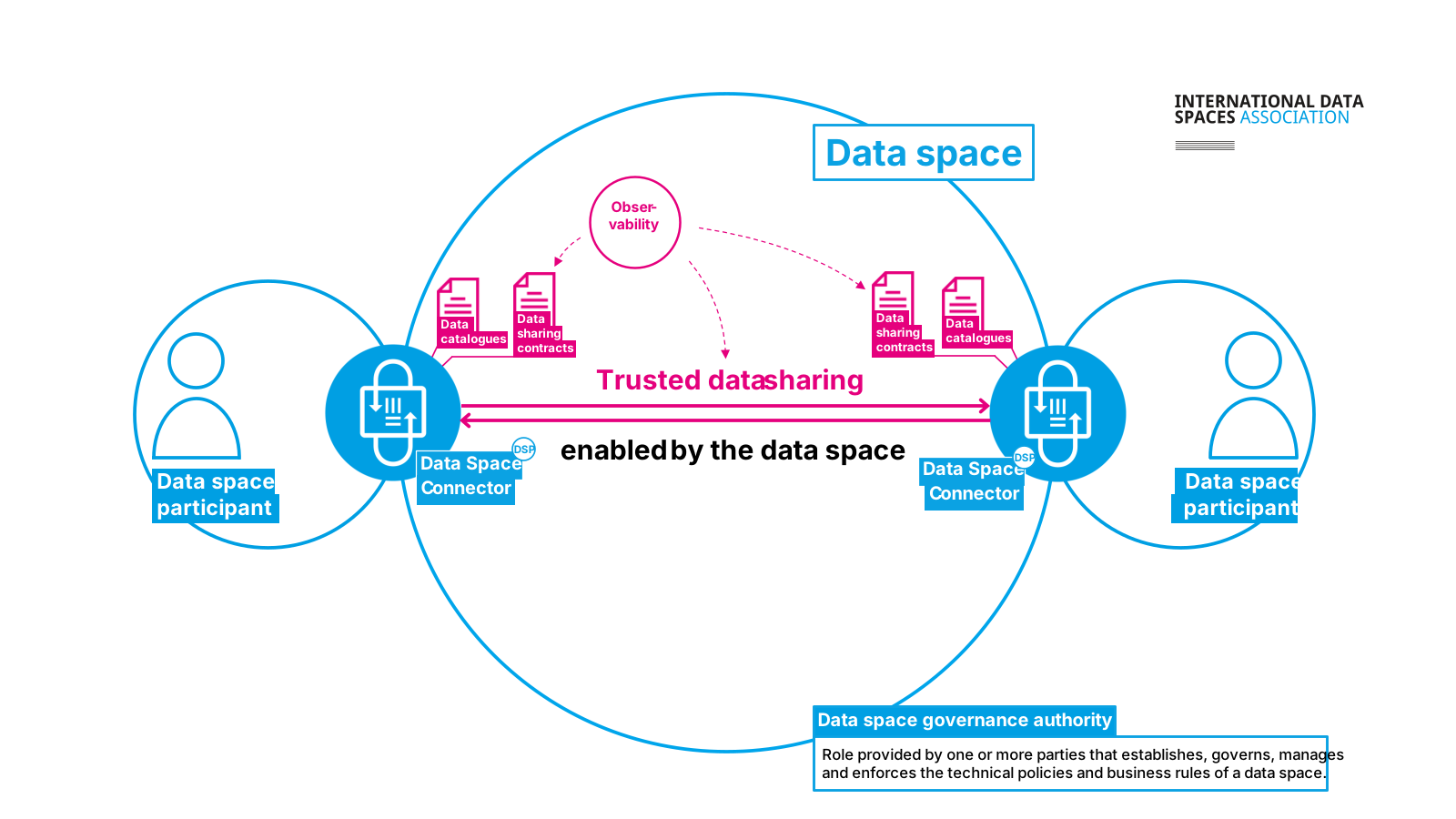
This is the key capability that observes data sharing transactions to ensure compliance with data sharing contracts. The requirements for observability derive from the actual business processes, from the agreements between data space participants, and from the general data space governance rules.
For more details, please refer to the IDSA Position Paper Observability in data spaces.
Standards, profiles and vocabulary
Additional elements help enable interoperability in data spaces.
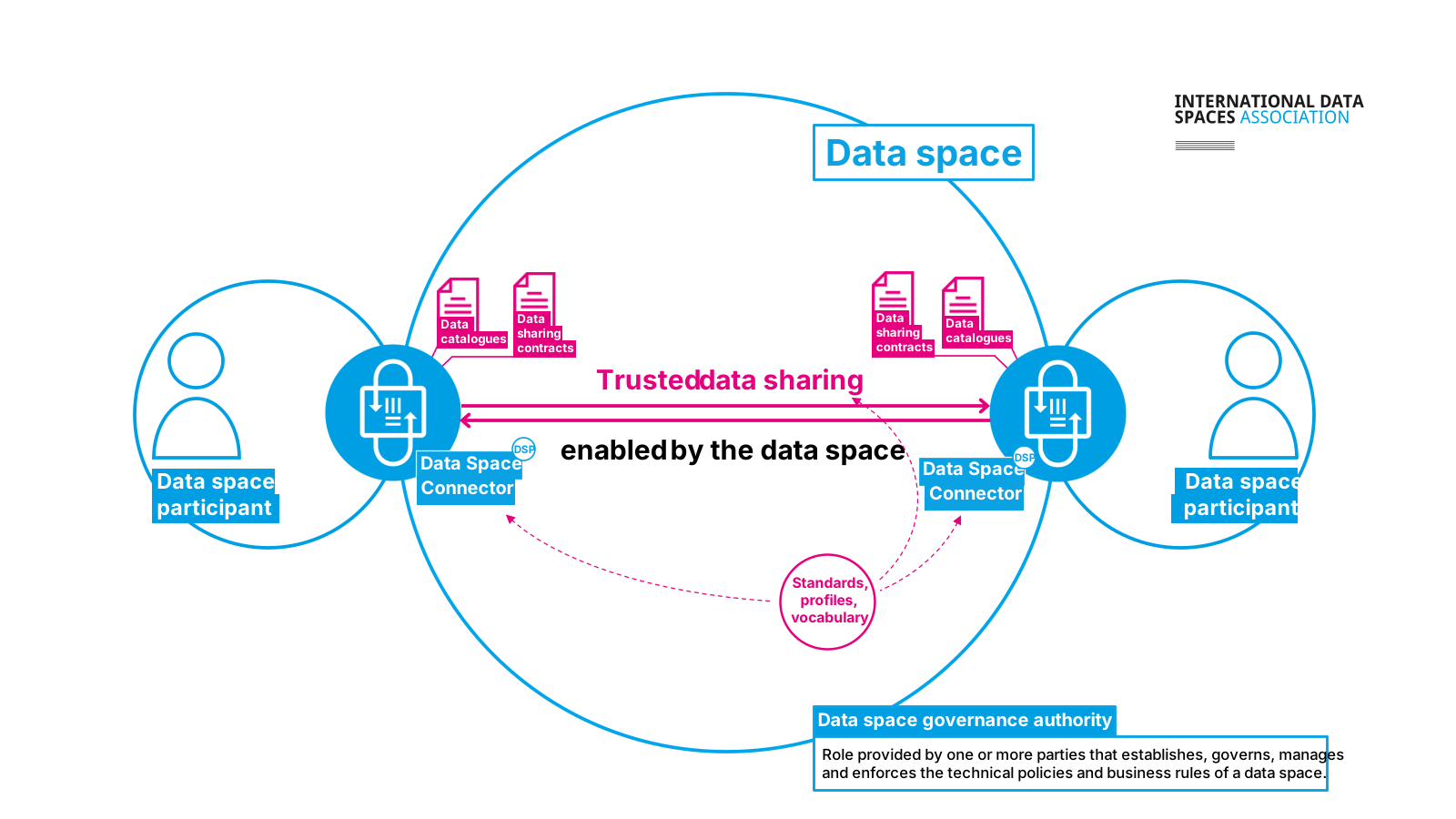
Given the diversity of participants in data spaces, data must be annotated with shared vocabularies, formalized through open standards and customized via community-specific profiles tailored to domains or use cases.
Data sharing across data spaces
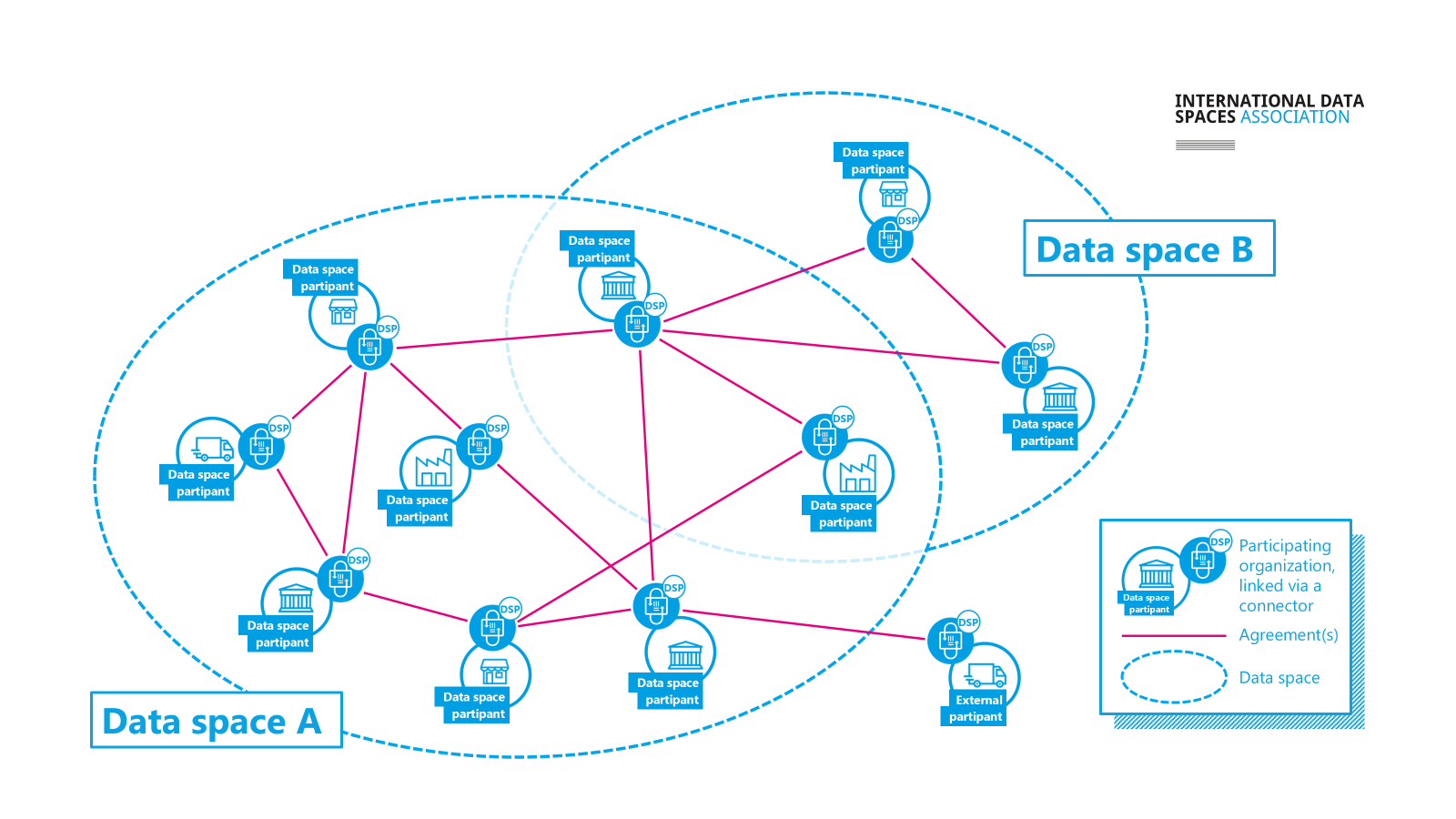
Trusted data sharing between participants in different data spaces is also possible, through measures for interoperability and decentralization.